Reading the River, Reading the Room: A Fly Fisherman’s Guide to Situational Awareness
We’ve all heard the golden rule of personal safety: situational awareness. But, what does that actually look like when your mind is occupied, your surroundings change, and a split-second decision determines your safety?
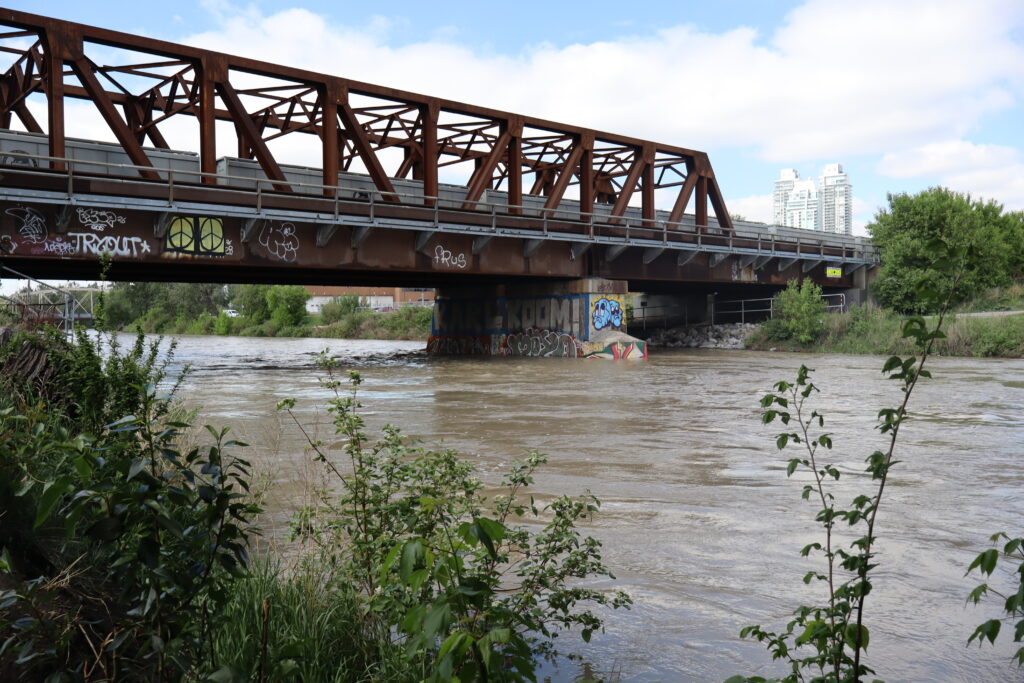
Recently, I went out fly fishing. I was looking for isolation, a perfect cast, and a break from the noise. Instead, I ended up under a bridge, stumbling directly into an unexpected, potentially high-risk encounter.
Here is how a routine fishing trip turned into a real-time lesson in self-protection, using Randy King’s Timeline of Self-Defence.
1. Environmental Awareness Precedes Situational Awareness
Good situational awareness doesn’t start with looking for bad guys; it starts with reading your environment.
On this particular day, the river was running incredibly high after days of heavy rain. The high water and shifting conditions naturally change the landscape, forcing wildlife—and people—to seek shelter in places they might not usually occupy.
My goal was simple: find a spot away from the crowds to get a clean cast off my fly rod. I chose a secluded area under a bridge. In focusing entirely on my sport, I completely missed the first critical phase of self-defense: Avoidance.
The Lesson: Avoidance means steering clear of potential danger before it ever materializes. By choosing an isolated, enclosed structural space (under a bridge) during adverse weather, I walked right past the avoidance phase and straight into an active situation.
2. The Snapshot: Stumbling into a Threat Pattern
As I moved under the bridge, the environment changed instantly. A woman startled me, and then my eyes adjusted to see a man sleeping nearby.
Your brain in these moments goes through a massive spike in adrenaline. Hypothetically, if they believed I was there to mess with them, threaten them, or touch their belongings, this could have escalated into a classic “stranger danger” violence scenario.
I was in their space, and I had failed to observe them before entering it. But once you are in the situation, the timeline shifts from Proactive to Active Management.
3. Verbal De-escalation and Response Analysis
When you find yourself in an accidental confrontation, your first and best weapon is verbal communication.
I didn’t freeze, and I didn’t get aggressive. Instead, I used immediate, empathetic boundary de-escalation:
“Hey, sorry. I’m just on my way through, let me get out of your hair.”
This script accomplishes two vital strategic goals:
- It states clear, non-threatening intentions: You are apologizing for the intrusion and explicitly stating that you are leaving.
- It serves as a diagnostic tool: It forces them to respond, allowing you to analyze their reaction.
In my case, the man’s response was friendly and kind. He told me it was no worries and asked what I was fishing for.
The Trap of the “Friendly” Response
It’s easy to drop your guard the moment someone smiles. But a professional mindset dictates that you are not out of the woods yet. In a self-protection strategy, an overly friendly demeanour in a high-risk setting can sometimes be a form of grooming—feeling out your energy, testing your boundaries, and seeing how compliant or distracted you are.
Keep moving, keep analyzing, and keep your distance until you have completely broken line of sight.
4. When Friendliness Fails: Target Hardening & The Bystander Effect
Had that interaction gone the other way, my next phase on the timeline is Target Hardening. This means transitioning from polite de-escalation to setting firm, unyielding boundaries.
- Use your voice: Raise your volume, change your tone, and command the threat to back off. Your voice is a physical barrier.
- Don’t rely on a crowd: If other people are around, never assume they will automatically step in to save you.
The bystander effect is a psychological phenomenon in which individuals are less likely to help a victim when others are present. The responsibility feels diffused.
[Emergency Situation]
│
├─► General Cry for Help ──► “Someone help!” ──► Responsibility Diffused (No one acts)
│
└─► Targeted Eye Contact ──► “You in the blue jacket, help me!” ──► Responsibility Assigned (Action taken)
To shatter the bystander effect, pick a specific person out of the crowd, make direct eye contact, point at them, and give a specific command: “You in the red jacket, call 911 right now.”
5. The Reality of Victimization
While encounters with strangers under bridges are what we picture when we think of self-defence, the statistics paint a very different picture.
Attacker Known vs. The Community Pillar
The reality is that most violence is committed by someone known to the victim—what Randy King classifies as “Attacker Known.”
To counter this, King emphasizes the Pillar of Community. A tight-knit, communicative community acts as an organic support network. When people look out for one another, they pass along warnings about toxic individuals, changing threat patterns, and localized dangers before they can manifest.
A Stark Metric on Vulnerability
Looking back at the snapshot under the bridge, if anyone was statistically at risk of becoming a victim that day, it wasn’t me—it was the woman.
Living unsheltered, sleeping under a bridge, and navigating transient environments puts individuals—particularly women—at an astronomically higher statistical risk of facing violence. Recognizing this nuance helps us look at self-defence not just through a lens of personal fear, but through a lens of objective situational reality.
Final Takeaway
I got lucky. My tactical error in avoiding the situation was met with a friendly conversation and a clean exit. But the river—and the streets—won’t always give you a pass.
Next time you head out, remember that awareness starts long before you see a threat. Read your environment, respect the phases of the timeline, and always have your script ready before you need to use it.
Stay aware, stay safe.
Ready to level up? 🚀 Join my Skool community to get exclusive training, connect with like-minded people, and get your questions answered daily. Click here to join us inside! 👇
Leave a Reply